| Actor |
Crew |
|
Linda Hunt
|
Narrator
|
| Samuel West |
Narrator
|
| Horst-Günter Marx |
Rudolf Höss
|
| Klaus Mikoleit |
Heinrich Himmler
|
| Gordon Newell |
Bill Cross
|
| Linda Ellerbee |
Hosted
|
|
|
| Director |
Dominic Sutherland;
Laurence Rees
|
| Producer |
Laurence Rees |
| Writer |
Laurence Rees; Linda Ellerbee |
|
| Plot |
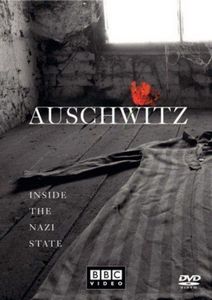
| Auschwitz occupies a chilling and disturbing place in the history of humankind. It began as a Nazi labor camp to terrorize the polish population and evolved into the site of the largest mass murder ever recorded. This six-part series, narrated by actress Linda Hunt ('The Practice', 'The Year of Living Dangerously'), presents an in-depth examination of the camp's evolution and the decisions that enabled such an incomprehensibly inhuman place to come into being.'Auschwitz: Inside the Nazi State' is the result of three years of research, drawing on the close involvement of world experts, recently discovered documents and nearly 100 interviews with camp survivors and perpetrators, many of whom are speaking on the record for the first time. Their stories are brought to life through the innovative use of archive footage, dramatic recreations of key decision-making moments, and their extraordinary testimony. While never losing sight of the suffering of the victims, this documentary offers a unique and alarming look at the mindset of the perpetrators - killers like the Commandant of Auschwitz Rudolf Hoss, camp doctor Josef Mengele, and S.S. Commander Heinrich Himmler.'Auchwitz: Inside the Nazi State' is written and produced by Laurence Rees, the Creative Director of BBC History Programs. The historical and script consultant for the series is the award-winning Hitler biographer, Professor Ian Kershaw. The last major project that Laurence Rees and Professor Ian Kershaw worked on together was 'The Nazis - A Warning from History', which was shown in 30 countries and won eight international awards including the Peabody Award.'Aushwitz: A New History' , the companion book to this series, is available at bookstores everywhere.DISC 1:1. Surprise Beginnings (47:45)2. Orders and Initiatives (47:45)3. Factories of Death (48:28)DISC 24. Corruption (47:35)5. Murder and Intrigue (47:57)6. Liberation and Revenge (47:29)* Laurence Rees Interview (16:07)* Six Follow-Up Discussions (total 47:23) |
| Movie Details |
| Genre |
Documentary; War; Television |
| Studio |

|
BBC |
|
| Series |
Auschwitz: The Nazis & The Final Solution |
| Movie Release Date |
2005 |
| Country |
 USA USA
|
|
| Language |
English |
| Audience Rating |
NR |
| Running Time |
286 |
| Color |
Color |
|
| Episodes
& Features |
|
Disc 1:
|
Features |
Scene Access
Making Of...
Closed Captioned
|
|
| Episode 1 |
Surprising Beginnings
This episode sets the stage for the series and examines the radical increase in violence against all opponents of the Nazi state. In particular, it explores the German army's invasion of the Soviet Union during the summer of 1941 and connects this campaign to the first gassing experiments in Auschwitz, Poland, which were aimed at Russian prisoners of war, not Jews.
|
| Episode 2 |
Orders and Initiatives
Laurence Rees continues his documentary history, marking the 60th anniversary of the liberation of Auschwitz, with an account of how the Nazis developed their ""Final Solution"". By 1942, Rudolf Hess had established the camp as a place to murder thousands of Jews, Slavs, & Roma Gypsies.
|
| Episode 3 |
Factories of Death
The Nazis' marshalling of Jews from across Europe - including the Channel Islands- gained momentum in 1942. Unable to cope with the huge influx, Auschwitz and Treblinka were modified with bigger gas chambers and crematoria. But inspirational stories of courage and compassion could still be found among this appalling catalogue of inhumanity, including that of German officer Albert Battel, who risked his life to save detainees.
|
| Episode 4 |
Corruption
By 1943, life was good for many of the SS. Eyewitness accounts recall how those in power at Auschwitz lined their pockets with wealth stolen from Jewish inmates while also engaging in illicit affairs.
|
| Episode 5 |
Frenzied Killing
SS Lieutenant Colonel Adolf Eichmann ordered the deportation of Hungary's Jews following occupation in 1944, precipitating the most intensive period of slaughter in Aushwitz's history. The Allies, meanwhile, faced dilemmas: should they divert valuable resources to bomb transport routes to the camp? And should they consider Eichmann's offer of one million Jewish lives in exchange for certain provisions - the ""Blood for Goods"" deal?
|
| Episode 6 |
Liberation and Revenge
The reality of life in the concentration camps was revealed upon the liberation of Auschwitz-Birkenau and Bergen-Belsen in 1945. But what was the fate of the remaining prisoners and the SS garrisons? The final days of the war and its immediate aftermath is a story as shocking as it is surprising, with Jewish survivors facing appalling treatment in their home countries and large numbers of SS perpetrators remaining hidden.
|
| Episode 7 |
The Film |
|
| Edition Details |
| Region |
 |
1 |
|
| Screen Ratio |
 1.78 1.78 |
| Format |
DVD |
| Layers |
Single Side, Dual Layer |
| Barcode |
Disc ID: 8DC2AA66C6664BEE |
| Release Date |
7/19/2005 |
| Subtitles |
English |
| Packaging |
Digipak |
| Audio Tracks |
 English Dolby Digital English Dolby Digital |
| No. of Discs/Tapes |
2 |
|
| Personal Details |
| Seen It |
No |
| Index |
1459 |
| Collection Status |
In Collection |
| Purchase Date |
6/13/2014 |
|
| Links |

|
|